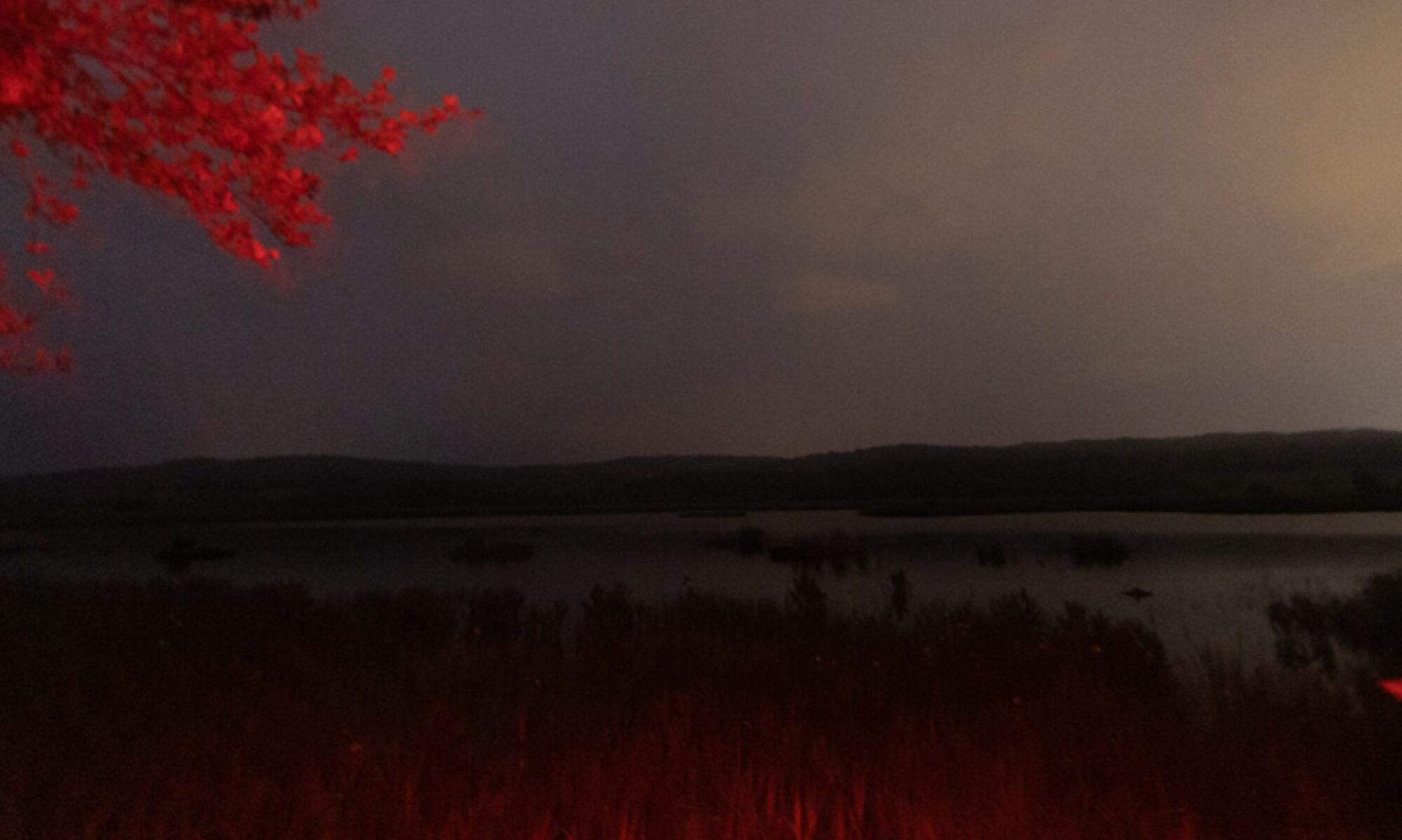
Artificial light at night (ALAN) is increasingly prevalent in both urban and rural environments. There is a broad spectrum of opinion about the benefits and problems of this based upon both real and perceived affordances and impacts of artificial light for humans and non-humans. The Dark Skies Luminous Nights project is interested in how these affordances and impacts are imagined, experienced, and valued and crucially how they might be inflected by accessible environmental information and academic discourse. A long-term aim is to use design to facilitate a time-based, more-than-human experience of nighttime environments.
The project developed methods for capturing and communicating both natural and artificial environmental light at night in ways that are compelling and invite discussion. These methods do not inherently support a specific position for or against artificial lighting but rather seek to create an attunement between individuals and the environment that is attentive to both natural and artificial sources of light and their rhythms and cycles.
Through workshops, events, small group discussions, and interviews, the project introduced these methods and how they might be used and valued to a wide range of people—from the public to urban designers, lighting designers, policy makers, landscape architects, and ecologists. The project shared discourse around perceptions of safety associated with ALAN and studies regarding the actual effects of increased artificial light on crime and road safety. It considered the visual quality of the night and our capacity to experience it as a time and place in its own right. It looked at the deleterious effects of ALAN on the health, well-being, and ecologies of humans and non-humans. The significance of ALAN are well documented, but it is often given less attention than other, less visible human interventions in the environment, such as air and water contamination. Whether one is supportive, critical, or ambivalent towards of ALAN, the night is often overlooked. Dark Skies Luminous Nights attempts to address this by making the night more visible.
Approach
Dark Skies Luminous Nights employed a combination of environmental data collection, creative practice, and engagement to capture, communicate, and reimagine the night. Situated in Leighton Moss RSPB Nature Reserve in the Arnside and Silverdale National Landscape, the project has two closely linked facets—one technical and one sociocultural—both of which are grounded in interdisciplinary academic research. A similar approach and methods were also used in the Slough Digital Urban Forest, and more recently, the methods were used in Rewilding the Night, a collaboration between Lancaster University and the University of Bonn, which was sited in Bonn Botanical Gardens, Germany. A detailed discussion and synthesis of all three projects can be found here.
On one side, the Dark Skies project developed innovative tools for observing and measuring light in the landscape. These included a network of low-power sensors, long-range communication infrastructure (LoRaWAN), and an all-sky astrocamera. Sensors were designed not just for function but also as tactile, sculptural artifacts that are sympathetic to forms found in the landscape, such as fruits, eggs, and nests, and can remain unattended for long periods. These artifacts quietly record the environmental rhythms of natural and artificial light across diurnal, lunar, and seasonal cycles.
On the other side, the project examines how such data might be communicated in ways that are meaningful, memorable, and socially impactful. Using creative methods—visualisations, materialisations, sonifications, and participatory events—Dark Skies Luminous Nights explored how sensor data can be used to create attunement between individuals and landscapes. Walking tours, night walks, workshops, and exhibitions were designed to cultivate awareness of the night, invite reflection on the role of light and its absence in our lives, and foster dialogue about the biological, ecological, social, and cultural values attached to both light and darkness.
Together, these two strands form a single research initiative that spans design, social and cultural geography, the environmental humanities, digital technologies, and artistic practice. It is an invitation to attend to the night not only as a site of environmental concern, but as a shared space of sensory, temporal, and ecological experience.
Dark Skies Luminous Nights was funded by the Arts and Humanities Research Council Impact Acceleration Account and the Joy Welch Post-doctoral Fund. It was generously supported by RSPB Leighton Moss, with particular thanks to Jared for his support and Mark and Will for their on-the-ground and technical expertise, support, and enthusiasm for the project, without which the project would not have been possible nor as enjoyable.
